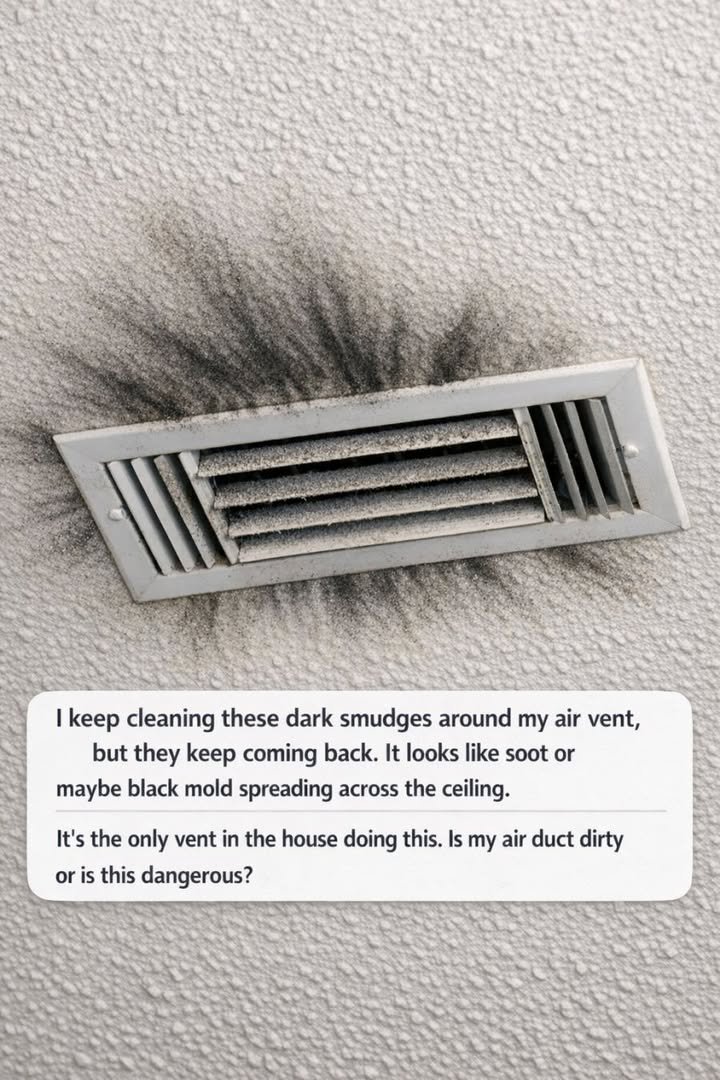
Soot can originate from several common household sources, including candles, fireplaces, and improperly maintained furnaces. Candles, especially those scented or made with paraffin wax, can produce significant soot. Burning them frequently near vents can lead to soot accumulation.
Fireplaces, if not properly ventilated, can also contribute to soot buildup. Similarly, furnaces that are not functioning efficiently may produce excess soot that can spread throughout the home via the HVAC system. Ensuring these sources are well-maintained and ventilated can help reduce soot-related staining.
6. Could This Be Black Mold—and Is It Dangerous?
Black mold is a serious concern due to its potential health risks, including respiratory issues and allergic reactions. It thrives in damp, dark areas, which can sometimes include HVAC systems if there’s a moisture issue.
To determine if the stains are mold, look for characteristic signs like a musty odor or a slimy texture. Mold testing kits are available for home use, but for a definitive identification, consulting a professional is recommended. Addressing moisture issues and ensuring proper ventilation can help prevent mold growth.
7. Simple At-Home Checks Before You Call a Pro
Start by closely inspecting the stained area. Use a flashlight to look for obvious signs of mold or soot. You can also try wiping the stain with a damp cloth—if it smears or wipes away easily, it might be soot.
Check nearby walls and ceilings for similar marks, which could indicate a more widespread issue. Monitor humidity levels and ensure your home is properly ventilated. These simple checks can help you determine whether you need professional intervention.
8. When You Need an HVAC Technician, Not Just a Cleaner
Don’t Miss The Rest! Press Next Button Below To Continue Reading 🔜🔜
Don’t Miss The Rest! Press Next Button Below To Continue Reading.