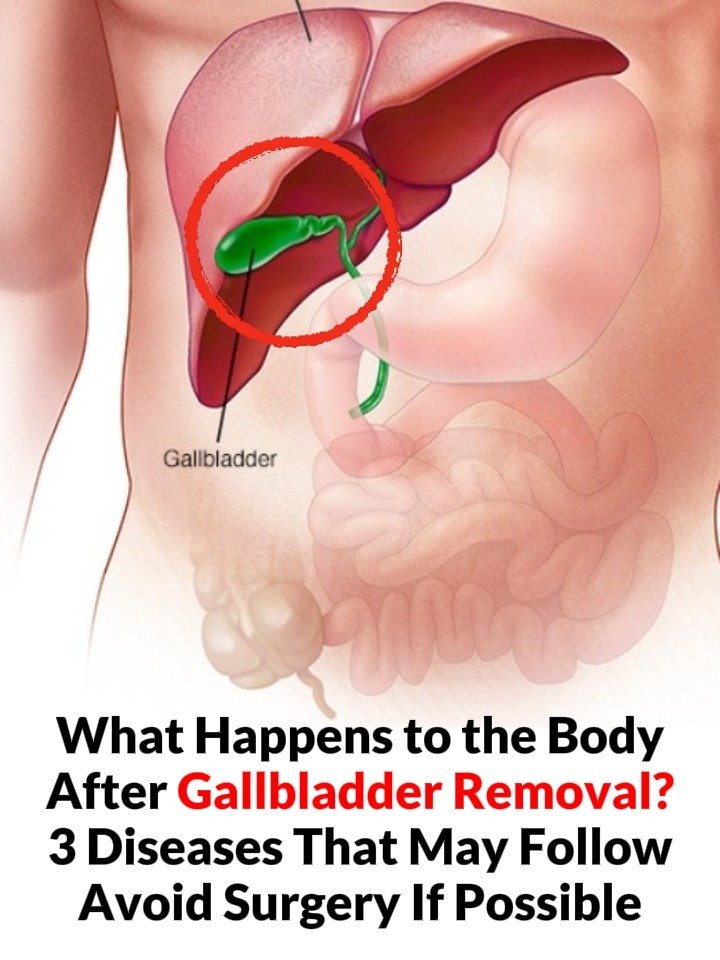
Gallbladder removal (called cholecystectomy) is a common and generally safe procedure—but it does change how your body handles digestion. It’s not accurate to say you should always avoid it; in many cases (like severe gallstones or infection), it’s the safest and most effective treatment.
Let’s break down what actually happens and the potential risks—without the scare tactics.
🧠 What the Gallbladder Does
The gallbladder stores bile made by your liver and releases it when you eat fat. After removal:
- Bile flows continuously into your intestines instead of being stored
- Fat digestion becomes less “timed,” which can affect some people
⚙️ What Happens After Surgery
Most people live completely normal lives, but some may notice:
1. Digestive Changes
- Bloating or gas
- Loose stools (especially after fatty meals)
- Occasional diarrhea
This is sometimes called postcholecystectomy syndrome, though it’s usually mild and manageable.
Don’t Miss The Rest! Press Next Button Below To Continue Reading 🔜🔜
Don’t Miss The Rest! Press Next Button Below To Continue Reading.