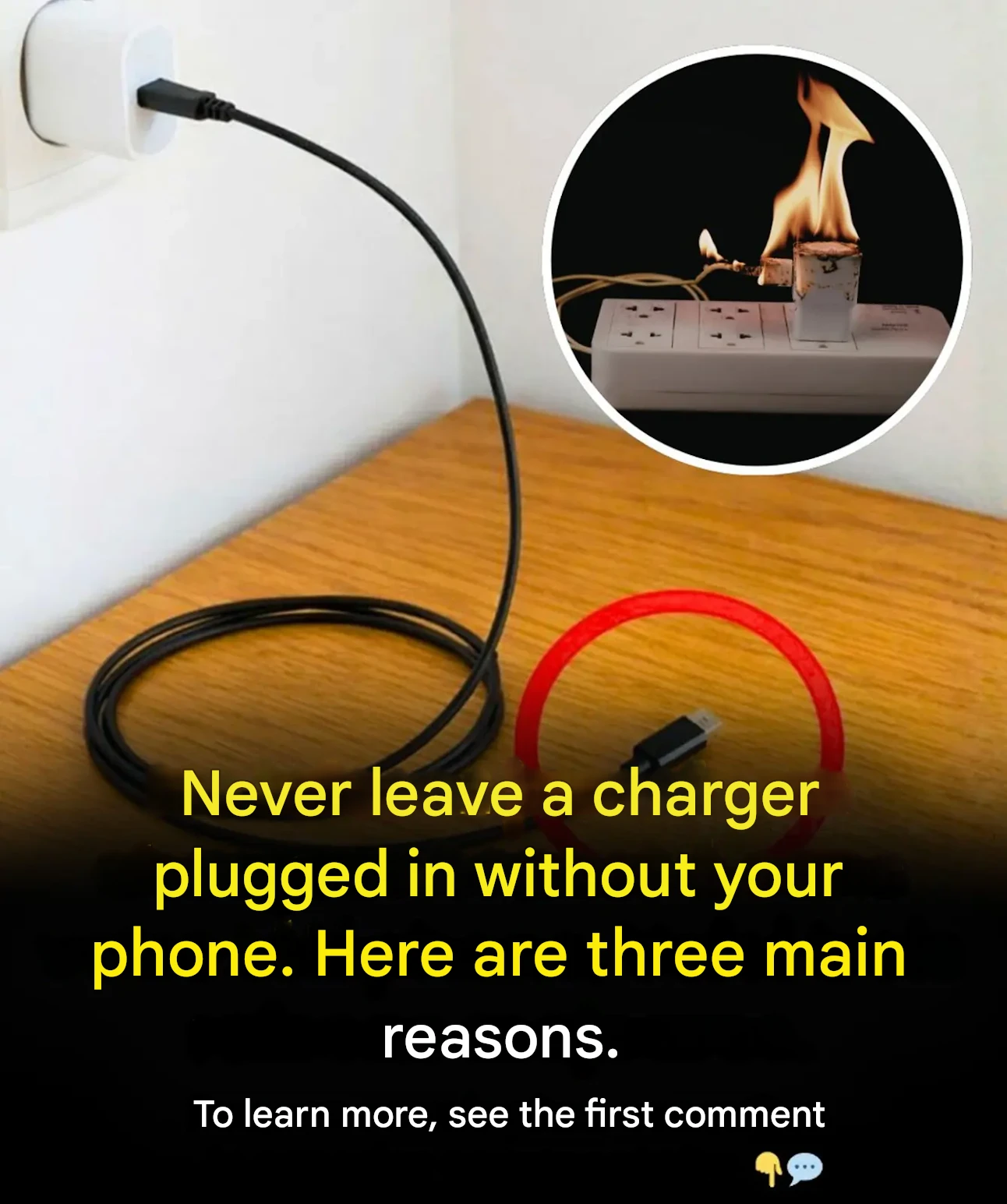
Admit it: you too sometimes leave your charger plugged in, even when your phone is no longer connected. It’s discreet, silent, almost invisible… so why worry about it? And yet, this small, everyday gesture, which we repeat without thinking, can have more consequences than we imagine. Safety, savings, durability: here’s why unplugging your charger should become as natural a reflex as closing the door when you leave. A simple but essential action, often underestimated, that deserves your full attention.
-
A risk of overheating that is often underestimated
Even without a phone plugged in, a charger continues to receive power. Its internal components remain active, causing a slight increase in temperature. Nothing dramatic, certainly, but over time, this repeated heat weakens the device.
The risk increases when the charger is old, damaged, or of poor quality. A dusty, loose, or worn wall socket can also worsen the situation. Many household electrical incidents do not occur during the use of an appliance, but when it remains plugged in for extended periods without supervision, particularly overnight or during prolonged absences.
Unplugging your charger therefore reduces an unnecessary risk, without any effort.
-
Invisible electricity consumption… but very real
We often talk about the most energy-intensive devices, but we forget these discreet little “electricity thieves.” A plugged-in charger consumes what’s called standby power. The amount is small, but it’s continuous.
In an average household, between phones, tablets, wireless headphones, and other electronic devices, several chargers remain plugged in constantly. Over the course of a year, this hidden consumption ends up impacting the bill, even if it goes unnoticed on a daily basis.
Making it a habit to unplug your chargers not only saves money but also reduces energy waste. It’s simple, free, and good for the planet— a smart everyday habit .
-
Unnecessarily reduced charger lifespan
- Chargers are not designed for continuous operation. When left plugged in day and night, their internal components wear out more quickly. As a result, they overheat, become less efficient, and can fail unexpectedly.
A worn-out charger isn’t just inconvenient; it can also become less safe. The older the components, the greater the risk of malfunction. By unplugging it when not in use, you extend its lifespan and avoid having to buy a replacement unnecessarily.
The small dangers we don’t always think about
Don’t Miss The Rest! Press Next Button Below To Continue Reading.