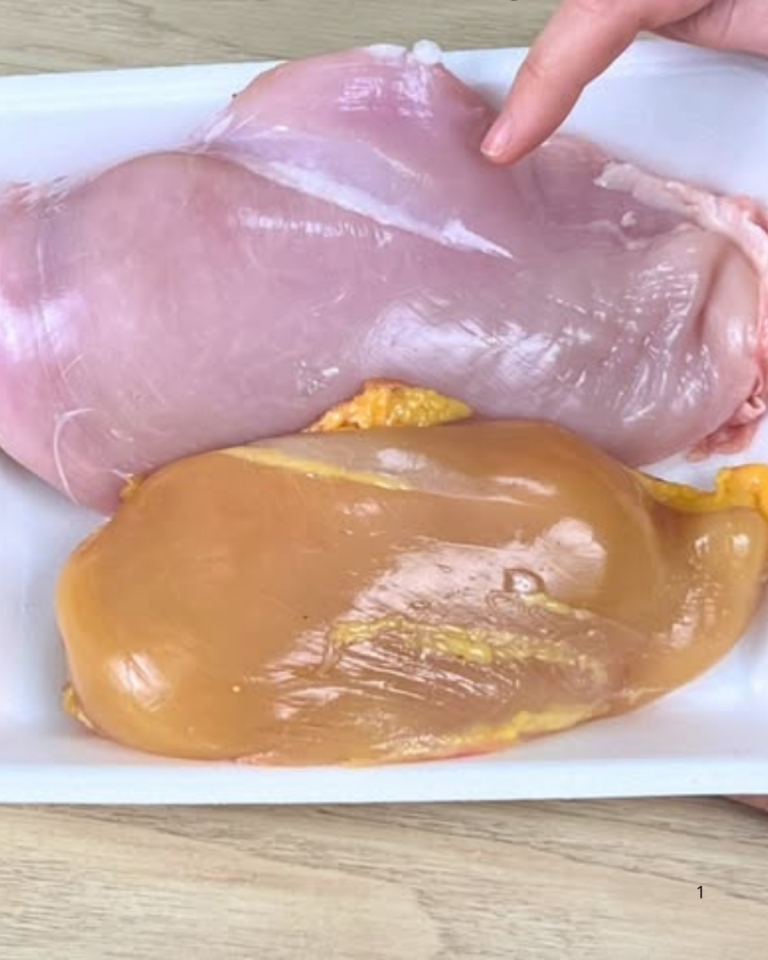
The most important factor affecting the color of chicken is what the animal eats.
Chickens fed diets rich in carotenoids—natural pigments found in foods like corn, fresh grass, and marigold flowers—tend to develop a yellowish color in their skin and fat. These pigments accumulate in the tissues, giving the chicken its golden appearance.
On the other hand, chickens fed diets based on grains such as wheat, soy, or sorghum—foods low in carotenoids—usually have paler, white or pink meat.
In some cases, natural pigments like xanthophylls (a type of carotenoid commonly found in corn) are added to feed to enhance the yellow coloration.
2. Age and Farming Method
The age of the chicken and how it is raised also play a significant role.
Intensively farmed chickens (broilers) are typically raised for rapid growth and are slaughtered young, usually between 40 and 60 days. Because of their short lifespan and controlled diet, their meat tends to be lighter in color.
Slow-growing or free-range chickens, often associated with yellow skin, are raised for a longer period—sometimes 80 days or more. This allows more time for natural pigmentation to develop, especially if the chickens have access to outdoor areas where they can eat plants rich in carotenoids.
These farming conditions can also influence texture and flavor, not just color.
3. Genetics: A Secondary Influence
Don’t Miss The Rest! Press Next Button Below To Continue Reading.